Smart Biometric Door Lock
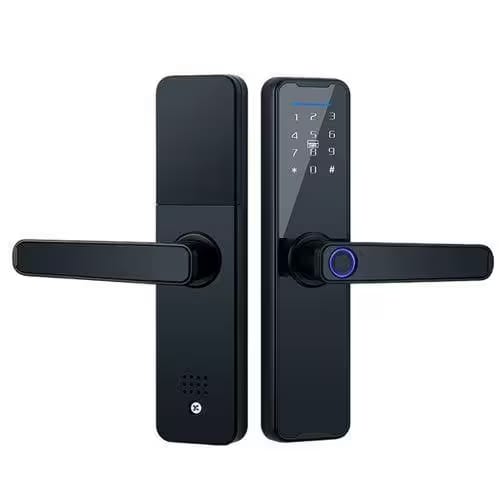
Key Access Methods Most models of this style offer 5-in-1 unlocking capabilities: Biometric Fingerprint: The circular sensor on the handle uses semiconductor recognition, which is faster and more secure than older optical sensors. Digital Keypad: A backlit touch screen for PIN codes. Many include a "scramble code" feature, allowing you to enter random numbers before or after your real code to prevent onlookers from guessing it. IC Card/Fob: A small RFID card or tag that you tap against the keypad area. Smartphone App: Control via Bluetooth or Wi-Fi (often using apps like Tuya or TTLock), allowing for remote unlocking and temporary "guest" codes. Mechanical Override: There is usually a hidden keyhole (often at the bottom) for a physical emergency key if the batteries die.
- Shipping:
Learn More
Key Access Methods
Most models of this style offer 5-in-1 unlocking capabilities:
Biometric Fingerprint: The circular sensor on the handle uses semiconductor recognition, which is faster and more secure than older optical sensors.
Digital Keypad: A backlit touch screen for PIN codes. Many include a "scramble code" feature, allowing you to enter random numbers before or after your real code to prevent onlookers from guessing it.
IC Card/Fob: A small RFID card or tag that you tap against the keypad area.
Smartphone App: Control via Bluetooth or Wi-Fi (often using apps like Tuya or TTLock), allowing for remote unlocking and temporary "guest" codes.
Mechanical Override: There is usually a hidden keyhole (often at the bottom) for a physical emergency key if the batteries die.
Security & Build Features
Anti-Panic Handle: From the inside, pushing the handle down usually opens the door immediately, while lifting it up engages the deadbolt.
Auto-Locking: You can typically set a timer (e.g., 5–30 seconds) for the door to lock itself automatically once closed.
Emergency Power: If the internal batteries (usually 4 AA) fail, there is typically a Micro-USB or USB-C port on the bottom of the exterior panel to provide temporary power via a power bank.
Material: Most are constructed from Zinc Alloy or Aluminum Alloy with a tempered glass panel for the keypad to resist scratches and wear.
Considerations for Installation
Door Thickness: These locks generally fit standard doors ranging from 35mm to 60mm in thickness.
Mortise Compatibility: When purchasing, you need to ensure the internal locking mechanism (the mortise) matches the existing cutout in your door (e.g., 5050, 6085, or single latch).
Weather Resistance: While many are rated for "outdoor" use, they are best suited for covered entryways. Direct, heavy rain can eventually affect the touch electronics.